
Topic Tags:
Effective infection control is central to resident safety in aged care, where close living environments, chronic illness, and high-touch shared spaces increase the risk of transmission. To support strong clinical governance, aged care providers must follow a risk-based approach that integrates infection prevention into everyday cleaning routines, environmental hygiene practices, and staff behaviours.
This article explores evidence-based infection control procedures that align with the Aged Care Quality Standards, Australian Guidelines for the Prevention and Control of Infection in Healthcare, and the Aged Care Infection Prevention and Control (IPC) Guide from the Australian Commission on Safety and Quality in Health Care.
Why Infection Control Matters in Aged Care
Aged care residents are more vulnerable to infection due to weakened immune systems, chronic health conditions, and frequent movement between communal areas. Minor lapses in hygiene can therefore escalate into outbreaks that affect residents, staff, and families.
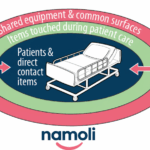
Because of this fact, the Aged Care Commission’s Infection Prevention and Control (IPC) Guide 2024 states that aged care organisations must adopt a risk-based model, meaning infection control measures should match the level of exposure risk within each area and task.
This approach is designed to:
- Reduce pathogen transmission and prevent outbreaks.
- Minimise antimicrobial resistance (AMR), which is increasing in residential care settings.
- Protect staff, visitors, and high-risk residents.
Key Infection Control Procedures for Aged Care
1. Preventing Cross-Contamination
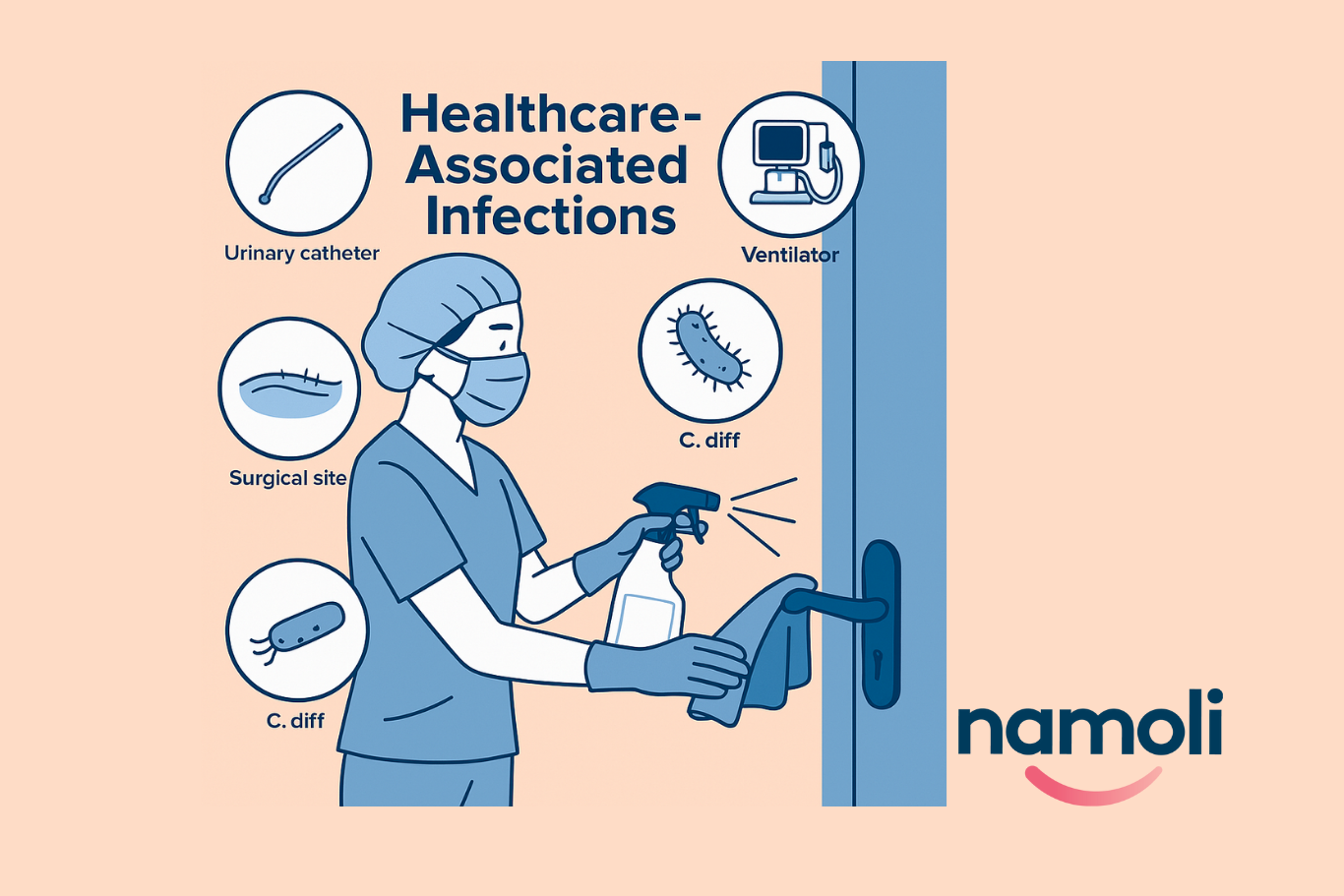
Cross-contamination remains one of the leading contributors to infection spread in residential care. In facilities where staff and residents frequently move between rooms, maintaining physical separation between clean and contaminated areas is essential.
Preventative measures include:
- Use of colour-coded cleaning tools to separate high-risk areas such as bathrooms and kitchens.
- Zoning workflows that clearly define clean and dirty routes.
- Correct PPE selection and use (gloves, gowns, masks, eye protection) based on exposure level and task type.
Learn more: Understanding Contaminated Zones in Healthcare: A Foundation for Infection Control
2. Environmental Cleaning and Disinfection
Regular and targeted cleaning remains the most effective way to control infection in aged care. Following the Commission’s Environmental Cleaning Flowchart and Principles of Product Selection factsheet recommends:
- Hospital-grade, TGA-approved disinfectants.
- Documented cleaning schedules with daily, weekly, and monthly tasks.
High-touch surface disinfection (door handles, light switches, bed rails, handrails, etc.). - ATP testing and audits to verify hygiene outcomes.
3. Hand Hygiene and Staff Training
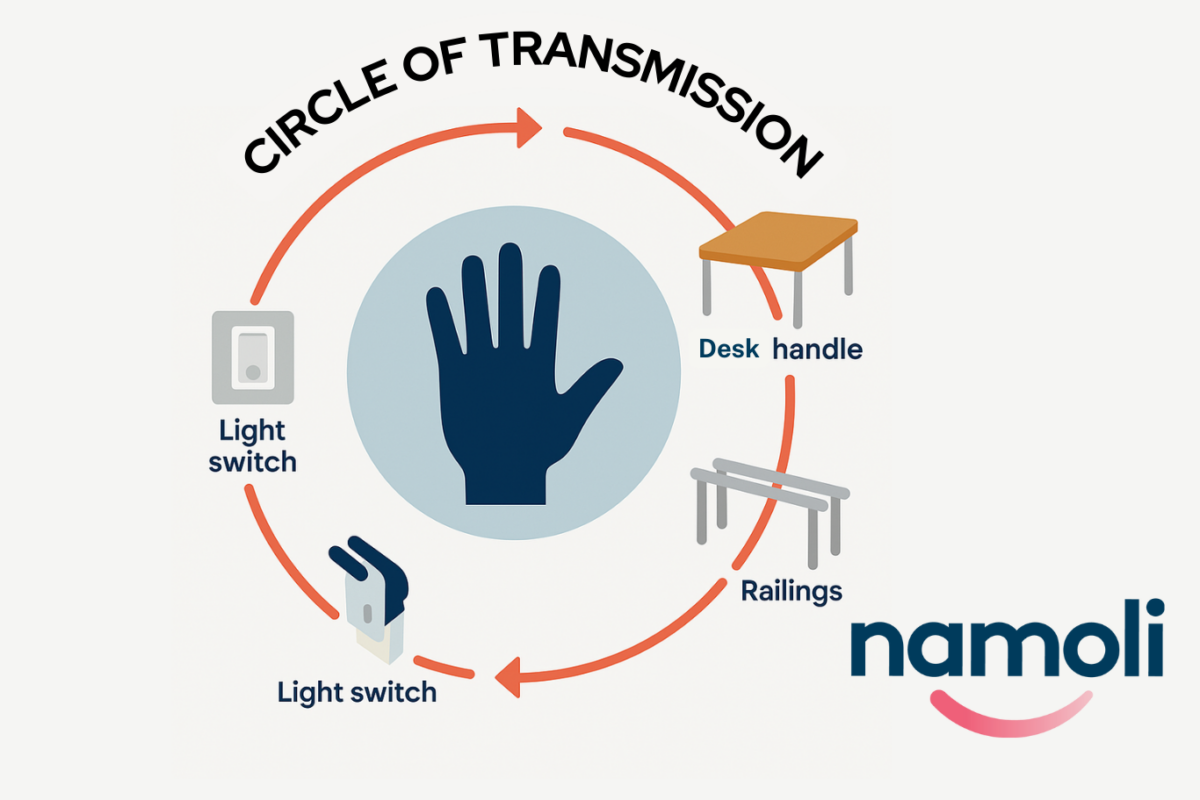
Hand hygiene is a cornerstone of infection prevention. In residential aged care, traditional observational audits may not be suitable due to privacy concerns, so additional assessment methods are recommended, such as:
- Product availability audits.
Staff competency checks. - Resident and family feedback mechanisms.
Learn more: Five Moments for Hand Hygiene – And the Hidden Risk on Surfaces
4. Waste Management and Laundry Hygiene
Incorrect waste or linen handling can lead to cross-contamination. Effective systems follow the Aged Care Waste Management Standards and Safe Work Australia guidelines, including:
- Colour-coded waste bins for clinical and general waste.
- Safe handling and storage of contaminated items.
- Correct laundering and sanitising of linens and uniforms.
5. Antimicrobial Stewardship (AMS)
Residents in aged care settings are particularly vulnerable to resistant infections due to frequent antibiotic exposure and close contact environments. The AMS Clinical Care Standard for Aged Care (2024) highlights that environmental cleaning plays an important part in reducing infection load and preventing unnecessary antibiotic use.
Cleaning partners can support AMS by helping facilities:
- Reduce environmental contamination that may trigger inappropriate antibiotic prescribing.
- Maintain high hygiene standards that lower outbreak risk.
- Promote safer, cleaner environments that support natural infection-prevention pathways.
Compliance and Record-Keeping
Aged care providers must demonstrate compliance with the Aged Care Quality Standards, particularly:
Standard 3 – Personal Care and Clinical Care
This standard requires providers to deliver safe, effective, and clinically appropriate care. Infection control forms a core component of this standard, with expectations around environmental hygiene, outbreak prevention, and safe clinical practices.
(Reference: Aged Care Quality and Safety Commission – Standard 3)
Standard 5 – Organisation’s Service Environment
Standard 5 ensures that the physical environment is clean, safe, and well-maintained. Providers must demonstrate that cleaning activities support resident wellbeing, minimise infection risks, and maintain hygiene in all shared and private areas.
(Reference: Aged Care Quality and Safety Commission – Standard 5)
To support accreditation, as your cleaning partners, Namoli provides the following:
- Documented site-specific cleaning schedules.
- Infection control checklists.
- Material Safety Data Sheets (MSDS).
- Staff training and competency records.
- Digital audit trails through app-based reporting.
These records support both internal reviews and external accreditation audits.
Learn more: A Guide to Aged Care Cleaning Standards & Infection Control
State Variations in Infection Control Requirements
Although national standards apply across Australia, each state maintains additional frameworks for reporting, outbreak management, and clinical oversight. For example, the National framework states that all aged care services must comply with the following to create a consistent national baseline for infection control and clinical governance:
- Aged Care Quality Standards (2024)
- Australian Guidelines for the Prevention and Control of Infection in Healthcare (2024)
- National Hand Hygiene Initiative (NHHI)
- Work Health and Safety Act 2011
However, here are the additional compliance requirements by state:
Queensland (QLD)
- Governed by the Public Health Act 2005 (QLD).
- Requirements include the Clinical Pathways for Residential Aged Care, outlining response and escalation protocols.
- Strong focus on disaster and outbreak management due to QLD’s higher tropical disease exposure.
- Facilities must liaise with the local Hospital and Health Services (HHS) for outbreak reporting.
New South Wales (NSW)
- Governed by the Public Health Regulation 2022 (NSW).
- Mandatory Infection Control Policy 2023 for residential care.
- Reporting requirements for notifiable diseases to Local Health Districts (LHDs).
Victoria (VIC)
- Governed by the Health Services Act 1988 (VIC) and overseen by Safer Care Victoria.
- Guided by the Victorian Health and Human Services Infection Prevention and Control Guidelines.
- Local frameworks such as the Residential Aged Care IPC Framework (2024) emphasise auditing and environmental hygiene verification.

The Role of Professional Cleaning Partners
While clinical teams focus on resident care, professional healthcare cleaners play a crucial role in maintaining an infection-safe environment. Partnering with Namoli provides aged care facilities with:
- Access to trained infection-control cleaning specialists.
- Evidence-based methods aligned with national and state guidelines.
- Transparent reporting through app-based task logs and cleaning audits.
- Support for staff education and continuous hygiene improvement.
Namoli’s programs bridge clinical expectations with operational delivery, ensuring facilities maintain safe environments every day, not only during audit periods.
Related Posts