Topic Tags:
In healthcare environments, many pathogens spread through high-touch surfaces that look clean but still carry organic residue. Traditional visual checks cannot confirm whether a surface is free from contamination, which is why more healthcare facilities are turning to Adenosine Triphosphate (ATP) testing as an alternative hygiene verification method.
For facility managers, ATP testing provides measurable evidence of cleaning effectiveness, strengthens patient safety practices, and supports audit readiness. In the following article, we will take you through how ATP works and why it is vital to healthcare facilities.
How Does ATP Testing Work in Healthcare?
ATP is present in all living cells, so ATP testing is the evaluation of the cleanliness by detecting residual organic material such as shed skin cells, body fluids, food residue, and microbes. Because ATP should not appear on a properly cleaned surface, its detection offers an immediate indication of contamination.
This verification test provides instant feedback far faster than laboratory-based sampling, allowing staff to validate cleaning effectiveness on the spot. While the tests do not identify specific pathogens and may not detect viruses directly, they reliably indicate organic soil where pathogens can survive or spread.
Because ATP testing verifies whether cleaning has removed organic residue, it also confirms that disinfectants can work effectively. This makes ATP a valuable quality-assurance measure that complements existing infection-control protocols, not a standalone or competing method.
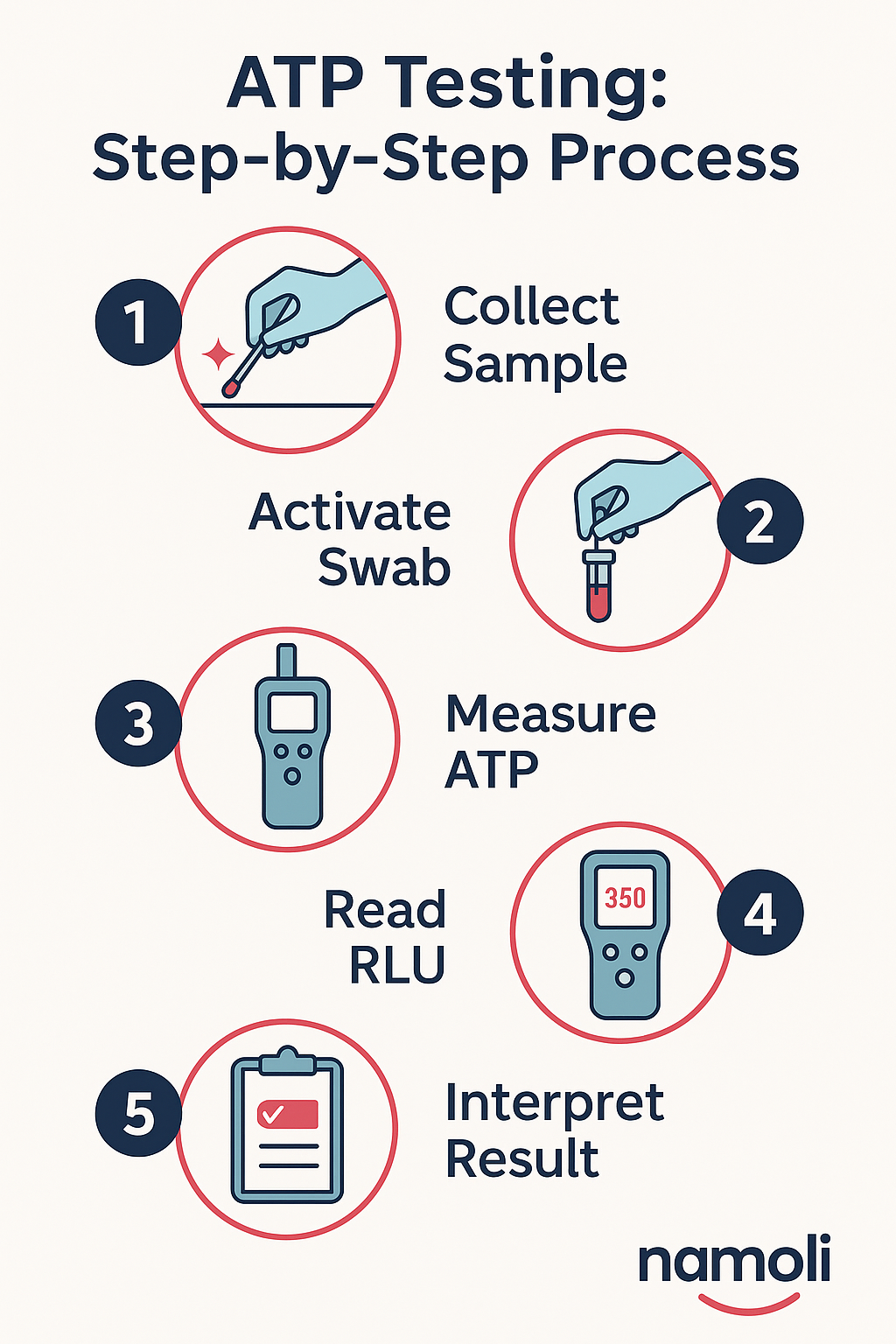
Here is how the ATP testing works in practice:
1. Swabbing a defined surface area – typically a high-touch point such as a bed rail, call button, or handrail.
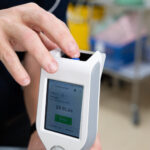
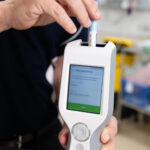
2. Placing the swab into a handheld luminometer, which contains a luciferase reagent.
3. Measuring the light reaction – ATP presence generates a bioluminescent signal.
4. Producing a numerical result, known as Relative Light Units (RLU). Lower RLU values indicate cleaner surfaces; higher values signal remaining organic matter.
Healthcare services often set threshold ranges. For example, 100–250 RLU for high-touch surfaces, based on risk level and organisational policies. Any readings above threshold are flagged for re-cleaning to maintain infection-prevention standards.
Why ATP Monitoring Improves Cleaning Performance
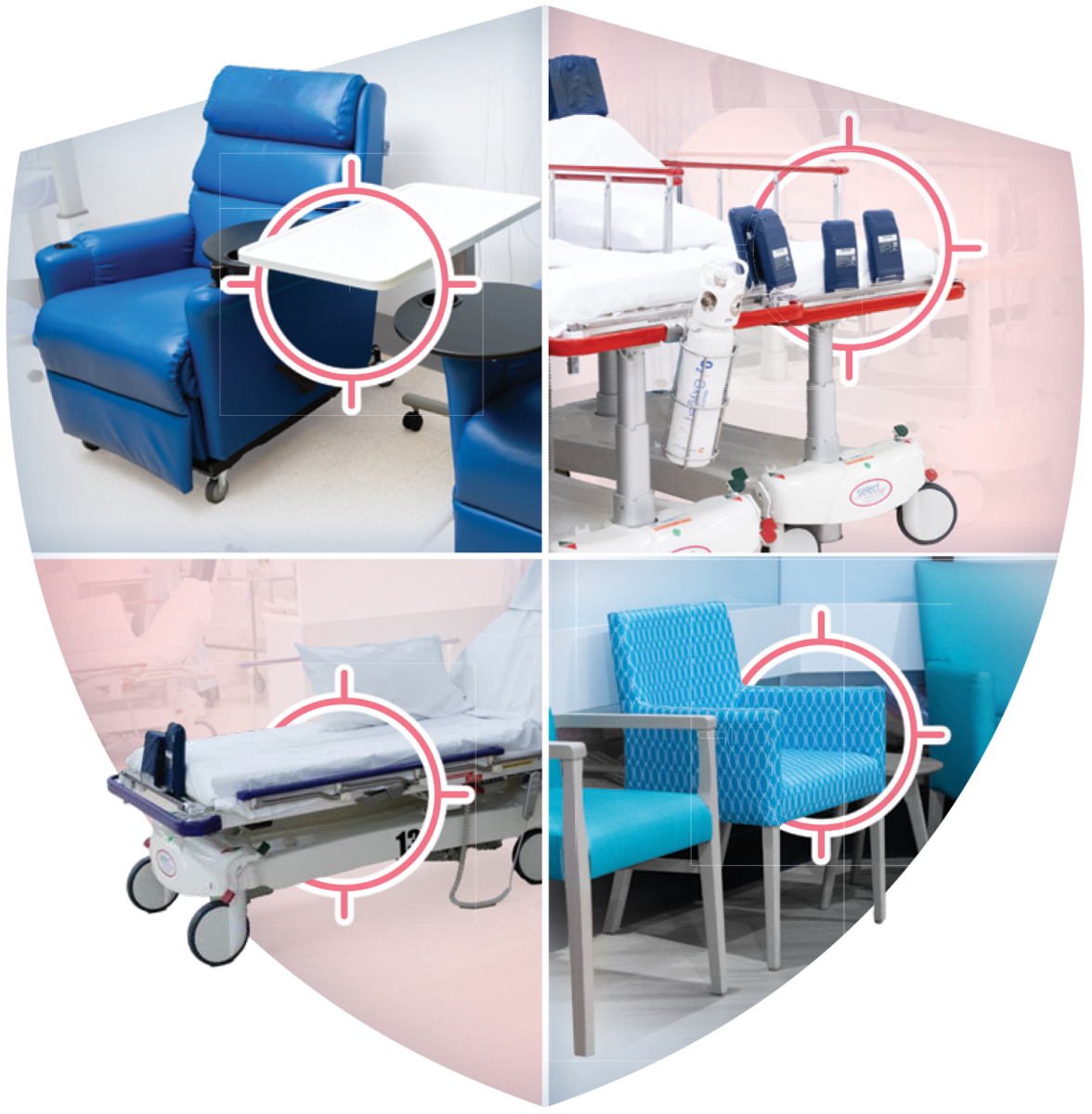
Research shows that ATP-based cleaning audits significantly improve hygiene outcomes, with some studies reporting that only 48% of high-risk surfaces were adequately cleaned prior to ATP implementation.
Once staff begin receiving ATP feedback, research has shown that compliance improves rapidly, with some facilities achieving over 93% cleaning accuracy after targeted training and auditing.
Facilities introducing ATP-supported quality improvement programs reported 50–75% reductions in C. difficile infection rates, demonstrating that verifiable cleanliness directly contributes to safer patient environments.
To further prove our point, multiple studies show a correlation between high ATP values and high microbial counts, reinforcing ATP’s value as a practical hygiene indicator. This makes ATP a valuable quality-assurance measure that complements existing infection-control protocols, not a standalone or competing method.
Compliance and Standards in Australia
ATP testing aligns with the expectations set by the National Safety and Quality Health Service (NSQHS) Standards, particularly Standard 3: Preventing and Controlling Infections. While ATP testing is not mandatory, NSQHS requires that healthcare services maintain a risk-based environmental cleaning program supported by objective evidence.
Guidance from the Australian Commission on Safety and Quality in Health Care (ACSQHC) recognises ATP bioluminescence as an acceptable method for evaluating environmental cleanliness. Its benefits include:
- Rapid, on-the-spot results
- No specialist laboratory skills required for use
- For trained cleaning staff, it can be easily implemented into current routines
As more health services adopt ATP testing, the practice is becoming widely used to validate visual audits, confirm that disinfectants have been applied effectively, and demonstrate environmental hygiene during accreditation.

Enhancing Patient Safety, Audit Readiness, and Infection Risk Reduction
ATP testing is a practical, evidence-based method that supports cleaner environments, safer patient care, and stronger compliance with national standards. For healthcare facilities seeking clearer visibility over their hygiene performance, ATP testing provides a reliable foundation for continuous improvement.
If you would like assistance assessing your current hygiene standards or implementing ATP testing as part of your cleaning program, the Namoli team is available to help.
Related Posts